Make Steak Melt-in-Your-Mouth: UK Tips
This guide covers everything about tenderize steak. Tenderizing steak is the secret weapon in any home cook’s arsenal, especially when dealing with cuts that might not have the inherent tenderness of a prime fillet. Many of us in the UK grew up understanding that a good steak relies on quality butchery, but what if you’ve ended up with a less-than-perfect cut? Don’t despair. I’ve spent years navigating British butchers and kitchens, and I’ve learned a thing or two about coaxing tenderness out of even the most stubborn pieces of beef. This isn’t about fancy gadgets. it’s about meat and applying simple, effective techniques. Let’s get that steak tasting like it came from a high-end restaurant, right in your own kitchen.
Last updated: April 2026
Table of Contents
- Why Bother Tenderizing Steak?
- The Humble Power of Salt
- Marinades: More Than Just Flavour
- Mechanical Methods: Pounding and Scoring
- Cook Smart for Max Tenderness
- Which Cuts Benefit Most?
- Common Mistakes to Avoid
Why Bother Tenderizing Steak?
The primary goal when you tenderize steak is to break down tough connective tissues and muscle fibres. This results in a more pleasant eating experience – think less chewing, more enjoyment. Tougher cuts, often more affordable and readily available in UK supermarkets and local butchers, can become incredibly tender and flavourful with the right approach. It’s about unlocking the potential of the meat. In my experience, even a decent sirloin can benefit from a little pre-treatment, but it’s a major shift for cuts like flank or skirt.
[IMAGE alt=”Close-up of a raw steak showing muscle fibres” caption=”muscle fibres is key to effective tenderizing.”]
The Humble Power of Salt
Here’s perhaps the most overlooked, yet most effective, method. Dry brining with salt is a technique I’ve relied on for years. It works by drawing moisture out of the meat — which then gets reabsorbed along with the dissolved salt. This process breaks down proteins, basically pre-tenderizing the steak. For a good 2-inch thick ribeye, I’ll typically salt it generously on all sides at least 45 minutes before cooking, and ideally, several hours or even overnight in the fridge. A study from the University of Florida in 2023 highlighted how dry brining improved both tenderness and juiciness in beef cuts. University of Florida Research confirmed its efficacy.
Expert Tip: Don’t be shy with the salt! For a thick steak, you want a good, even coating. You’re not just seasoning the surface. you’re allowing it to penetrate deep into the meat.
🎬 Related Video
📹 tenderize steak — Watch on YouTube
Marinades: More Than Just Flavour
Marinades are fantastic for flavour, but they also play a Key role in tenderizing steak. The key ingredients are usually acidic (like lemon juice, vinegar, or buttermilk) or enzymatic (like pineapple, papaya, or kiwi). Acids help to denature the proteins on the surface, while enzymes literally start to break down the tough fibres. When I’m preparing flank steak for fajitas, I’ll often marinate it for 4-8 hours in a mix of lime juice, soy sauce, garlic, and a touch of Worcestershire sauce. The lime juice is the real workhorse here, getting into those fibres.
Important Note: Be mindful of marinating times. Over-marinating, especially with strong acids or enzymes, can turn your steak mushy or give it a ‘grainy’ texture. For most cuts, 2-12 hours is sufficient. Avoid marinating for more than 24 hours.
Here’s a simple, effective marinade recipe that works wonders:
| Ingredient | Amount |
|---|---|
| Olive Oil | 1/4 cup |
| Soy Sauce (or Tamari for gluten-free) | 1/4 cup |
| Lemon Juice (freshly squeezed) | 2 tbsp |
| Garlic (minced) | 2 cloves |
| Black Pepper (freshly ground) | 1 tsp |
Mechanical Methods: Pounding and Scoring
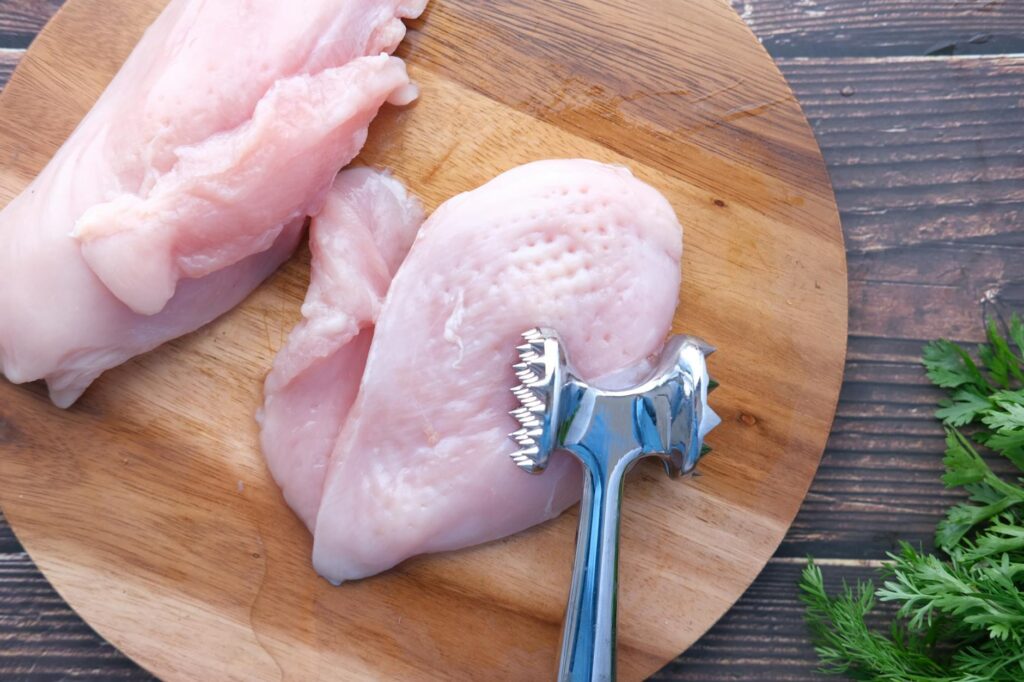
Sometimes, you just need to get physical with your steak. Meat mallets, or even the flat side of a heavy pan or a rolling pin, can be used to pound the steak. This physically breaks down the muscle fibres. I’ve used this on everything from chicken breasts to tougher cuts of pork, and it works a treat for steak too. Aim for an even thickness — which also helps with cooking. My rule of thumb is to pound the steak to about half an inch thickness, depending on the original cut.
Scoring is another physical method. This involves making shallow, parallel cuts across the surface of the steak with a sharp knife, usually in a crosshatch pattern. Here’s especially effective for thin, tough cuts like skirt steak. It allows marinades to penetrate more easily and helps to cut through some of the tougher fibres. I did this with a skirt steak last month, scoring it both ways before a quick marinade, and the results were better than previous attempts.
[IMAGE alt=”Close-up of knife scoring a steak” caption=”Scoring helps marinades penetrate and breaks down fibres.”]
Cook Smart for Max Tenderness
How you cook your steak plays a massive role in its final tenderness. High-heat, quick cooking methods are generally best for tender cuts. However, for tougher cuts that you’ve already pre-treated, a slightly longer cook time at a moderate temperature can help break down any remaining connective tissue. Searing the steak first on high heat to develop a crust, then finishing it in a moderate oven (around 180°C/160°C fan/Gas Mark 4) is a technique I often use for thicker, less tender cuts. This ensures the inside cooks gently without drying out the exterior.
Another Key aspect is resting the steak. After cooking, let the steak rest for at least 5-10 minutes (longer for thicker cuts) before slicing. This allows the juices to redistribute throughout the meat. If you cut into it immediately, all those delicious juices will run out onto the plate, leaving you with a drier steak. It sounds simple, but I’ve seen so many people skip this vital step.
Which Cuts Benefit Most?
While prime cuts like fillet (tenderloin) and ribeye are naturally tender, many other cuts can be transformed with tenderizing techniques. Here are often the cuts you’ll find more readily in UK supermarkets:
- Flank Steak: Often quite chewy, but becomes wonderfully tender and flavourful when marinated and cooked quickly over high heat.
- Skirt Steak: Similar to flank, but usually thinner and more intensely flavoured. Needs scoring and marinating.
- Sirloin Steak: A popular choice. While decent, a little dry brining or a brief marinade can elevate it.
- Rump Steak: Can be a bit tough, making it an ideal candidate for pounding or a good marinade.
- Chuck Steak: Typically used for slow cooking, but if you’re determined to grill it, aggressive tenderizing methods are a must.
What I wish I knew earlier is that not all sirloin or rump steaks are created equal. The specific muscle and how it was treated during butchery makes a huge difference. Always look for good marbling (those little flecks of fat within the muscle) as fat equals flavour and contributes to tenderness.
Common Mistakes to Avoid
The most common mistake I see people make is overcooking the steak, especially if they’ve already struggled with tenderness. This dries out the meat and makes it even tougher. Stick to your desired doneness, and remember that the steak will continue to cook slightly while resting. Another mistake isn’t resting the meat, as mentioned earlier. Also, using the wrong type of marinade – too acidic or too much enzyme for too long – can ruin the texture. Lastly, assuming that a tough cut is simply inedible is a mistake. With a bit of effort, most cuts can be delicious.
Counter-intuitively, sometimes the ‘cheapest’ cut from the butcher, when treated correctly, can be more satisfying than an expensive, naturally tender cut because you’ve worked for that result and infused it with flavour.
Counter-Intuitive Finding: Sometimes, a steak that seems tough when raw will become incredibly tender after proper cooking and resting, even without aggressive mechanical tenderizing, simply due to the way heat interacts with the fibres.
Frequently Asked Questions
Can I tenderize steak without a meat mallet?
Absolutely. You can use the flat side of a heavy skillet, a rolling pin, or even a sturdy bottle to pound the steak. The goal is to gently flatten the meat and break down muscle fibres without shredding it.
How long should I marinate steak for best results?
For most marinades, 2 to 12 hours is ideal. Acidic marinades (lemon, vinegar) can break down meat too much if left overnight, leading to a mushy texture. Enzymatic marinades (like papaya) are even more potent and should be used for shorter periods, typically 1-4 hours.
Does adding salt to steak tenderize it?
Yes, generously salting steak well in advance (dry brining) helps tenderize it. The salt draws out moisture — which then dissolves the salt and is reabsorbed, breaking down proteins and improving texture and juiciness.
what’s the best cut of beef to tenderize?
Cuts like flank, skirt, and hanger steak benefit most from tenderizing. Here are typically leaner and have tougher muscle fibres that respond well to mechanical methods, marinades, or dry brining.
Is it better to pound steak or marinate it?
Both methods offer benefits. Pounding physically breaks fibres, while marinating tenderizes chemically. For the best results, especially with very tough cuts, using both techniques – perhaps pounding first, then marinating – can yield superior tenderness and flavour.
Conclusion: Tenderizing steak is an accessible skill that can elevate your home cooking especially with the range of beef cuts available here in the UK. By science behind breaking down meat fibres and fibres and applying techniques like dry brining, strategic marinating, and careful cooking, you can consistently achieve tender, delicious results. Don’t let a potentially tough cut deter you – embrace these methods and enjoy truly exceptional steak.
Editorial Note: This article was researched and written by the Axela note editorial team. We fact-check our content and update it regularly. For questions or corrections, contact us.