Ashgabat: Turkmenistan’s Marble Mirage and the Question of Reality
Turkmenistan city Ashgabat, often dubbed the ‘White City’, presents a dazzling spectacle of gleaming marble edifices, grand boulevards, and monumental statues. it’s a city meticulously designed to impress, a testament to ambitious national vision. However, beneath this awe-inspiring exterior lies a complex reality, marked by significant economic challenges and a history of profound isolation. The stark dichotomy between Ashgabat’s opulent façade and the nation’s actual economic conditions raises critical questions about development, governance, and the country’s future engagement with the world.
Last updated: April 21, 2026
what’s Turkmenistan city Ashgabat known for architecturally?
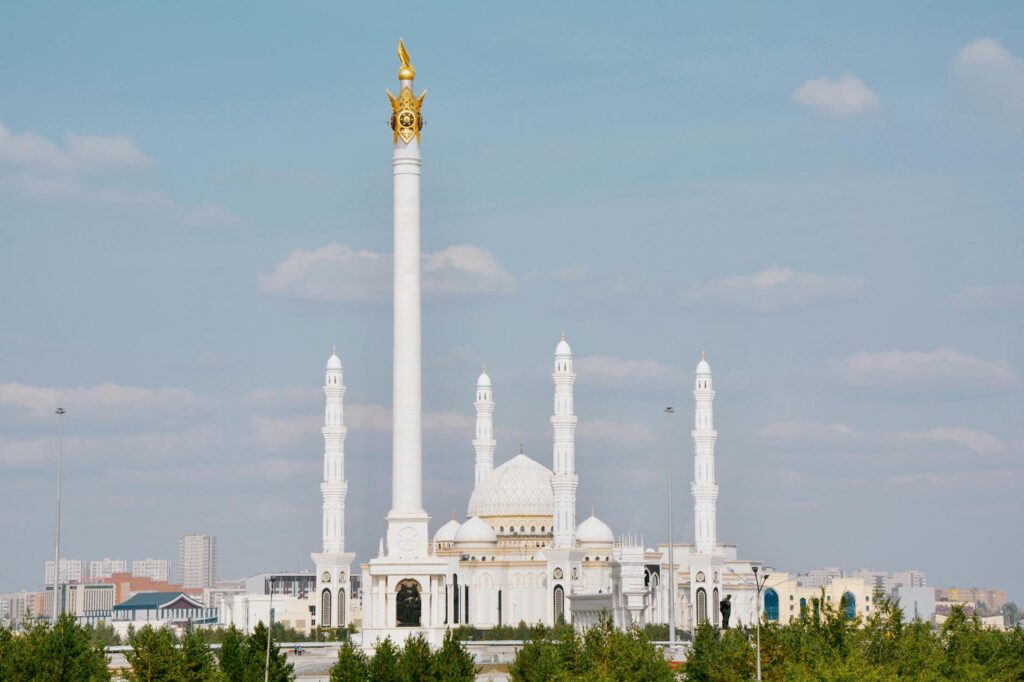
Ashgabat is globally recognized for its unique architectural style, heavily featuring white marble. The Guinness World Records has recognized it for having the highest density of white marble buildings. According to Global Voices (2026), the city’s design is characterized by lavish, often monumental structures that dominate its landscape, creating a visual identity that’s both striking and, to some, overwhelming. These buildings, ranging from government ministries and cultural centers to residential complexes and the Ashgabat International Airport, are clad in polished white marble, reflecting the abundant sunshine and contributing to its ‘White City’ moniker.
The architectural vision for Ashgabat was heavily shaped by the late President Niyazov and continued by his successor, Berdimuhamedow. This vision prioritizes grandeur and a distinct aesthetic, often at a significant cost. The city’s design emphasizes wide, open spaces and a controlled, almost sterile, urban environment. While visually stunning, this architectural uniformity and scale can create an atmosphere that some visitors describe as surreal or even desolate, despite its immense construction.
What are the economic realities behind Ashgabat’s marble facade?
The gleaming marble of Ashgabat often works as a stark contrast to the economic realities faced by Turkmenistan and its citizens. While the capital boasts extravagant architecture, the nation’s economy is heavily reliant on its vast natural gas reserves. Fluctuations in global energy prices have a direct and real effect on the country’s economic stability. According to the UNECE (2026), regional connectivity and economic cooperation are Key for countries like Turkmenistan, suggesting a need for broader economic diversification beyond resource extraction.
Despite the outward appearance of prosperity in the capital, reports from organizations like Global Voices (2026) highlight that many citizens face economic hardships. Issues such as currency controls, inflation, and limited access to foreign exchange can create significant challenges for ordinary Turkmen. The state’s economic policies, while aimed at national development, haven’t always translated into widespread prosperity for the general population. This disparity creates a palpable tension between the image projected by the capital and the lived experiences of many.
The $14 billion ‘city of the dead’ narrative, as reported by UNILAD Tech (2025), points to massive infrastructure projects that, despite their scale and cost, may not serve the population’s immediate or long-term needs, or could become underused assets.
Is Turkmenistan opening up to tourism?
After decades of stringent isolation, Turkmenistan is showing tentative signs of opening up to more tourists. CNN (2025) notes that this former Soviet state, once one of the world’s most isolated countries, appears to be signaling a readiness to welcome more visitors. This shift could be driven by a desire to diversify its economy beyond hydrocarbons and to improve its international image.
The government has been making efforts to facilitate tourism, including streamlining visa processes for certain nationalities and promoting the country’s unique cultural heritage and natural landscapes. Events like the XXIII International Exhibition “White City Ashgabat” (Turkmenportal.com, 2026) — which showcases the nation’s development and economic potential, also serve as platforms to attract international attention and potential investors or tourists.
However, significant hurdles remain. Turkmenistan’s reputation for strict regulations and its perceived authoritarian governance, as humorously noted by LADbible (2025) comparing its rules to North Korea’s, can deter potential visitors. The country’s limited tourism infrastructure outside of Ashgabat and the challenges associated with independent travel also present barriers. Therefore, while the intention to increase tourism seems present, the practical execution and its success remain to be seen. The SPECA (Special Programme for the Economies of Central Asia) forum (UNECE, 2026) aims to advance regional connectivity — which could indirectly benefit Turkmenistan’s tourism sector by improving transit and regional cooperation.
What are the challenges for international visitors in Ashgabat?
Visiting Ashgabat presents a unique set of challenges that stem from the country’s policies and its historical isolation. Obtaining a visa can be a complex and lengthy process, often requiring a pre-arranged tour and itinerary. Independent travel is heavily restricted, and visitors are typically expected to be accompanied by a guide throughout their stay. This level of control can make the experience feel restrictive for many travelers accustomed to more freedom.
Also, communication can be a barrier. While some tourist-facing staff may speak English, Russian is more widely understood among the general population. Internet access can be slow and unreliable, and social media platforms are often blocked or heavily censored. The country’s strict rules, some of which seem unusual to outsiders, require careful adherence to avoid any misunderstandings or issues with authorities (LADbible, 2025).
The currency situation also poses practical difficulties. The official exchange rate for the Turkmen manat differs from the black market rate, and access to foreign currency can be limited. Travelers often need to rely on official exchange points — which can be inconvenient. Despite these challenges, the sheer uniqueness of Ashgabat’s architecture and Turkmenistan’s relatively untouched tourist appeal continue to draw a niche segment of adventurous travelers.
Ashgabat’s Infrastructure and Development Projects
Ashgabat’s development is characterized by ambitious, large-scale infrastructure projects. The city has seen the construction of numerous government buildings, sports facilities, and residential areas, all built with the signature white marble. The ‘White City Ashgabat’ expo itself (Turkmenportal.com, 2026. business.com.tm, 2026) works as a showcase for these ongoing developments and future plans, highlighting technological advancements and construction achievements.
However, the sustainability and utility of some of these mega-projects are often questioned. UNILAD Tech (2025) described a $14 billion urban development project as being ‘completely empty,’ suggesting a potential disconnect between the state’s investment in infrastructure and its actual utilization by the population. Such projects, while enhancing the city’s visual grandeur, may represent a significant drain on national resources that could otherwise be allocated to other critical sectors like healthcare, education, or economic diversification.
The Future Outlook for Turkmenistan and its Capital
The future trajectory of Turkmenistan city Ashgabat and the nation at large hinges on its ability to navigate its complex economic and political landscape. The government’s stated desire to attract more tourists, as reported by CNN (2025), indicates a potential willingness to gradually open up and engage more with the international community. This could be a Key step towards economic diversification and reducing the nation’s reliance on natural gas exports.
Participation in regional forums like the SPECA Economic Forum (UNECE, 2026) is a positive sign, building dialogue on connectivity and cooperation. Such initiatives are vital for Turkmenistan to integrate more effectively into the global economy and to benefit from shared development strategies. The success of these efforts will likely depend on continued reforms, greater transparency, and a more inclusive approach to economic development that benefits all citizens, not just the capital’s image.
While the allure of Ashgabat’s marble city remains, its long-term sustainability and appeal will depend on how Turkmenistan addresses its underlying economic challenges and its relationship with the outside world. The journey from a highly isolated state to a more engaged global player is a delicate one, and Ashgabat’s future is inextricably linked to the nation’s progress on these fronts.
Frequently Asked Questions
what’s the primary material used in Ashgabat’s architecture?
The primary material used in Turkmenistan city Ashgabat’s architecture is white marble. The city is renowned for its high concentration of marble-clad buildings, earning it the nickname ‘White City’ and a place in the Guinness World Records for this architectural distinction.
Why is Ashgabat called the ‘White City’?
Ashgabat is called the ‘White City’ due to the pervasive use of white marble in its construction. Almost all of its prominent buildings, monuments, and even the airport are clad in this material, reflecting sunlight and creating a consistent, gleaming aesthetic throughout the capital.
What are the main economic drivers for Turkmenistan?
Turkmenistan’s economy is driven by its vast reserves of natural gas. While efforts are being made towards diversification, hydrocarbon exports remain the primary source of national income, making the economy susceptible to global energy market fluctuations.
Is it difficult to get a visa for Turkmenistan?
Yes, obtaining a visa for Turkmenistan can be challenging. The process is often stringent, requiring pre-arranged tours, itineraries, and documentation, and independent travel is severely restricted for most nationalities.
what’s the ‘White City Ashgabat’ expo?
The ‘White City Ashgabat’ expo is an international exhibition held in Turkmenistan that showcases the nation’s construction achievements, economic development, and urban planning projects, especially highlighting the progress and vision for the capital city.
Moving Beyond the Marble: A Path Forward
Turkmenistan city Ashgabat stands as a remarkable, albeit controversial, urban achievement. Its white marble grandeur is undeniable, a bold statement of national ambition. Yet, the true measure of its success lies not solely in its aesthetic appeal but in its ability to build sustainable development and improve the lives of its citizens. As the country tentatively explores greater engagement with the world, the challenge for Turkmenistan is to balance its unique architectural vision with economic realism and a commitment to transparency. For potential visitors, understanding this duality is key to appreciating the complex reality of this intriguing Central Asian capital.