
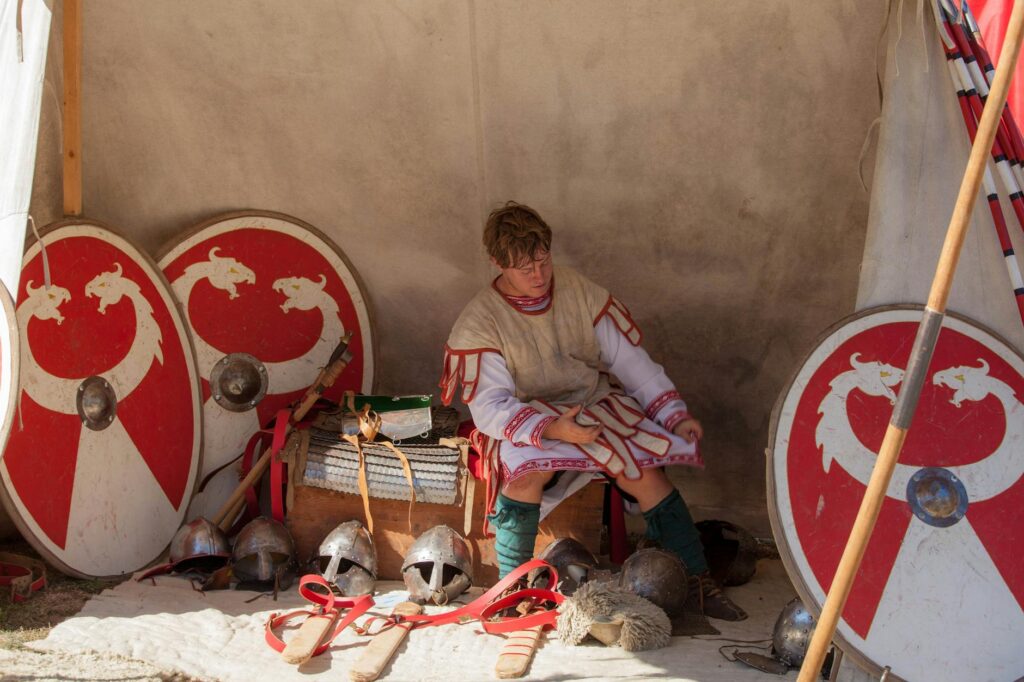
Roman Strong: Beyond the Myths in 2026
The concept of ‘Roman Strong’ in 2026 is often misunderstood, painted with broad strokes of military might and architectural grandeur. However, a deeper look reveals that Roman strength wasn’t solely about legions or aqueducts. it was a complex mix of adaptable governance, pragmatic engineering, and societal structures that allowed for unprecedented longevity and influence. Understanding this nuanced strength is key to appreciating its lasting legacy.
Last updated: April 18, 2026
This article challenges the simplistic view of Roman strength, exploring its practical applications and enduring principles that still resonate today. We’ll move beyond the usual narratives to uncover the less-discussed elements that truly made the Roman world formidable and influential, offering insights relevant even in our modern, rapidly evolving landscape.
Featured Snippet Answer: True Roman strength in 2026 is understood not just as military conquest or monumental building, but as the sophisticated integration of law, adaptable governance, and pragmatic innovation. These elements builded resilience, widespread influence, and a lasting cultural impact that continues to inform modern systems, proving that enduring power lies in systemic solidness.
Table of Contents:
- what’s Roman Strong, Really?
- Challenging the Legionary Myth
- Roman Engineering: A Blueprint for Endurance
- Governance and Law: The Invisible Strongholds
- How Roman Strong Influences Modern Systems
- Common Mistakes When Evaluating Roman Strength
what’s Roman Strong, Really?
When we talk about ‘Roman Strong’ in 2026, we’re not just referring to a historical period, but to a set of principles and achievements that demonstrate remarkable resilience and influence. It’s about the systems they built, the ideas they propagated, and their ability to adapt and endure over centuries. This isn’t about a single emperor or a specific battle. it’s about the foundational elements that allowed an empire to rise, persist, and leave an indelible mark on the world.
The core of Roman strength lay in its pragmatic approach to problem-solving. Whether it was managing vast territories, integrating diverse populations, or developing infrastructure, the Romans focused on what worked, often borrowing and adapting ideas from others. This adaptability, coupled with a strong sense of civic duty and a sophisticated legal framework, created a society that was solid and influential.
Challenging the Legionary Myth
The popular image of Rome is often dominated by its legions – disciplined soldiers marching in formation, conquering vast territories. While the Roman military was a powerful force and a key component of its expansion, focusing solely on military might offers a limited perspective on what made Rome ‘strong’. The legions were a tool, but the underlying structures that supported them and allowed for the administration of conquered lands were arguably more Key for long-term dominance.
What often gets overlooked is the logistical genius, the road networks built to support troop movement (and trade), and the integration of local populations into the Roman system, sometimes through citizenship or alliances. The true strength wasn’t just in winning battles, but in effectively governing the peace and assimilating diverse cultures into a cohesive, albeit sometimes coercive, empire. This administrative capacity allowed Roman influence to penetrate far deeper than any single military campaign.
Roman Engineering: A Blueprint for Endurance
Roman engineering is legendary, and for good reason. Their advancements in concrete, aqueducts, roads, and public buildings weren’t just feats of construction. they were practical solutions that directly contributed to the empire’s strength and longevity. These projects facilitated trade, supplied cities with water, allowed for rapid troop deployment, and demonstrated Roman power and organization to its citizens and subjects.
Consider the aqueducts: these weren’t just channels for water. they were complex systems of gravity-fed infrastructure that supported urban development and public health on a scale previously unseen. Similarly, Roman roads, like the Appian Way, were built to last, facilitating communication and commerce across thousands of miles. This infrastructure was a tangible manifestation of Roman power and a critical element in maintaining control and building economic prosperity throughout the empire.
Aqueducts and Urbanization
The construction of aqueducts allowed Roman cities to grow exponentially. Reliable access to clean water supported larger populations, enabled sanitation systems, and fueled public baths — which were central to Roman social life. This infrastructure was a direct enabler of urban density and a key factor in Rome’s ability to manage and develop its territories.
Road Networks
The vast network of Roman roads, estimated to be over 250,000 miles, was instrumental. It allowed for swift military movements, efficient tax collection, and the smooth flow of goods and ideas. This interconnectedness was vital for maintaining the integrity of a sprawling empire and building a common Roman identity.
Governance and Law: The Invisible Strongholds
Perhaps the most enduring aspect of Roman strength lies in its systems of governance and law. Roman law, with its emphasis on justice, precedent, and codified statutes, provided a framework for order and dispute resolution across diverse regions. This legal structure was adaptable, evolving over centuries to address new challenges and incorporate different cultural norms.
The Roman concept of citizenship, while not always universally applied, also played a role in integrating conquered peoples and building loyalty. By extending rights and responsibilities, Rome could create a sense of belonging and shared purpose — which was a powerful force for cohesion. These administrative and legal innovations were the invisible strongholds that held the empire together long after military campaigns had ceased.
The Evolution of Roman Law
From the Twelve Tables to the Corpus Juris Civilis under Justinian, Roman law developed sophisticated principles that still influence legal systems today. Concepts like innocent until proven guilty and the importance of evidence have roots in Roman jurisprudence. This legal framework provided a predictable and equitable (for its time) system that facilitated trade and social order.
Administrative Structures
Rome developed complex administrative structures to manage its provinces. Governors, tax collectors, and local officials were appointed to maintain order, collect revenue, and administer justice. While often subject to corruption, these systems were generally effective in projecting Roman authority and extracting resources necessary to maintain the empire.
Roman law has been called the greatest legal achievement of antiquity. Its principles and structure have profoundly shaped the legal systems of Western Europe and, through them, of the world. (Source: Oxford Classical Dictionary)
How Roman Strong Influences Modern Systems
The legacy of Roman strength isn’t confined to history books. it’s woven into the fabric of modern society. From the architectural styles that grace our cities to the legal principles that govern our courts, Roman influence is pervasive. Understanding this connection helps us appreciate the enduring power of well-designed systems and pragmatic innovation.
Many Western legal systems are direct descendants of Roman law. Concepts like contracts, property rights, and even the structure of legislative bodies often echo Roman precedents. In engineering, principles of structural integrity and large-scale infrastructure development continue to draw from Roman examples. Even the idea of a unified, large-scale political entity, though different in form, owes a debt to the Roman model.
Legal and Political Echoes
The very structure of many Western governments, with their emphasis on representative bodies and codified laws, can be traced back to Roman precedents. The concept of a republic, the use of senates, and the development of legal frameworks are all areas where Roman influence is undeniable.
Urban Planning and Infrastructure
Modern urban planning often incorporates lessons learned from Roman city design, including the importance of grid layouts, public spaces, and efficient utility systems. The Roman focus on durable, functional infrastructure continues to inspire engineers and architects.
| Aspect of Roman Strength | Modern Relevance |
|---|---|
| Roman Law | Foundation for many Western legal systems (e.g., civil law) |
| Aqueducts | Inspiration for modern water management and supply systems |
| Road Networks | Early models for efficient transportation and communication infrastructure |
| Republican Governance | Influenced structures of modern democratic republics |
| Concrete Technology | Pioneering use of materials for durable construction |
Common Mistakes When Evaluating Roman Strength
One of the biggest mistakes people make when evaluating ‘Roman Strong’ is to view it through a purely modern lens, judging ancient practices by contemporary ethical standards. This leads to a distorted understanding. Another common error is focusing too narrowly on military might and ignoring the complex administrative, legal, and engineering achievements that underpinned Rome’s long-term success.
And — there’s a tendency to homogenize the Roman experience. Rome wasn’t a monolith. its strength evolved over a thousand years and varied across its vast territories. What constituted ‘strength’ in the Republic differed from the Empire, and a citizen in Rome experienced Roman rule differently from someone on the fringes of Britannia. Recognizing this diversity is key to a richer understanding.
Anachronistic Judgments
Applying 21st-century values to 1st-century practices obscures the historical context. While we can critique past actions, understanding Roman strength requires appreciating the norms and limitations of their era.
Overemphasis on Military
While the legions were vital, Rome’s ability to govern, tax, and integrate diverse populations was equally, if not more, critical for its enduring influence. Military success without effective administration is fleeting.
Frequently Asked Questions
What was the primary reason for Roman strength?
The primary reason for Roman strength was its adaptable and pragmatic approach to governance, law, and engineering — which builded resilience and widespread influence over centuries, rather than relying solely on military might.
Did Roman strength only come from the military?
No, Roman strength was complex. While the military was Key for expansion and defense, its enduring power also stemmed from sophisticated legal systems, efficient administration, and innovative engineering that facilitated trade and urban development.
How did Roman law contribute to its strength?
Roman law provided a consistent framework for order, dispute resolution, and governance across vast and diverse territories. Its principles of justice and codified statutes builded stability and facilitated economic activity — which were vital for the empire’s longevity.
Are there examples of Roman engineering still visible today?
Yes, remarkable examples of Roman engineering endure. Famous aqueducts like the Pont du Gard in France, well-preserved Roman roads, and structures like the Pantheon in Rome showcase the durability and ingenuity of Roman construction techniques.
what’s the most misunderstood aspect of Roman strength?
The most misunderstood aspect is often the overemphasis on military conquest as the sole source of strength. The complex, adaptable systems of governance, law, and infrastructure that enabled the administration and integration of conquered peoples are frequently overlooked.
The Enduring Lessons of Roman Strong
In 2026, the concept of ‘Roman Strong’ offers more than just historical curiosity. it provides valuable lessons in resilience, adaptability, and the power of solid systems. By looking beyond the surface-level myths of military might and monumental architecture, we can appreciate the deeper, more systemic strengths that allowed Rome to shape the Western world and continue to influence us today. Understanding these foundational principles can offer insights into building more enduring structures, both literally and figuratively, in our own time.
The key takeaway is that true strength isn’t just about power, but about intelligent design, effective organization, and the ability to adapt and endure. Here are the elements that truly defined Roman strength and continue to offer lessons for the modern era.
Source: Britannica
Editorial Note: This article was researched and written by the Axela note editorial team. We fact-check our content and update it regularly. For questions or corrections, contact us.